
What Would Your Legacy Portrait Say About You?
Updated: Jul 25

There is a question I sometimes ask the people I work with — not at the start, but after we've talked for a while, after the stories have begun to flow and the memories have surfaced like old photographs pulled from a drawer. It's the question at the heart of every legacy portrait painting I create.
If a single painting could tell the story of your life, what would be in it?
It's a question worth sitting with.
What Makes a Legacy Portrait Different
For centuries, portraits were reserved for kings, generals, and the wealthy elite — not simply because of the cost, but because of the understood weight of the thing. A portrait was a declaration. It said: this person lived. This person mattered. Remember them.
That impulse hasn't changed. What has changed is our understanding of who deserves to be remembered — and how.
A legacy portrait isn't about vanity. It's about intention. It's about taking the accumulated richness of a life and making it visible, permanent, and meaningful to the people who will come after you.
The Objects That Tell Your Story
Think for a moment about the things in your home that carry the most meaning. Not the most expensive things — the most storied ones.
Perhaps it's a worn book you've returned to again and again. A piece of jewelry passed down through generations. A trophy from a chapter of life you're quietly proud of. A photo of someone who shaped who you became. A musical instrument. A tool of your trade. A view from a window you've loved.
These aren't just objects. They are evidence of a life. And in a thoughtfully composed portrait, each one becomes part of the visual vocabulary of you.
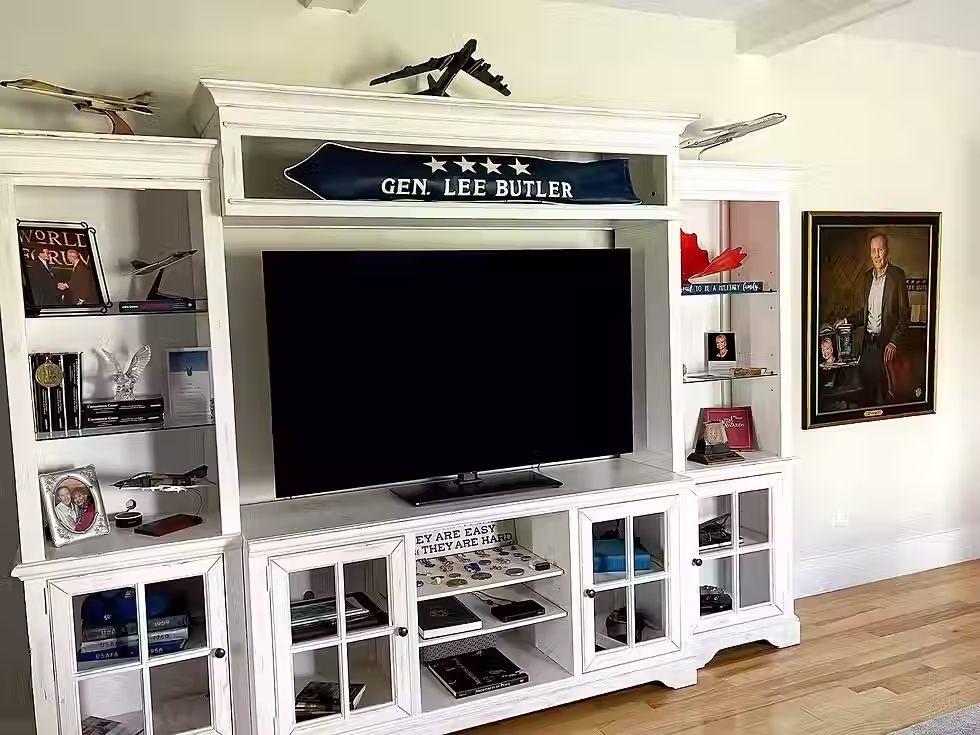
I once had the privilege of working with a retired military officer whose portrait grew, conversation by conversation, into something deeply personal — a painting layered with symbols of service, leadership, and love. What moved me most was how naturally the story emerged. He didn't have to reach for it. It was all there, waiting to be seen.
That's what I find, again and again: people's lives are far richer than they realize. They simply haven't been asked the right questions.
The People Who Belong Beside You
A life is not lived alone. And a legacy portrait need not be either.
Some of the most powerful portraits I've created have included the quiet presence of someone else — a spouse, a parent, a child — woven into the composition in a way that honors the relationship without overshadowing the subject. A framed photograph on a desk. A name inscribed on an open book. A second chair, placed just so.
Who has been the constant in your story? Whose presence, even in absence, defines a chapter of your life?
These are the details that transform a painting from a likeness into a love letter.
The Setting That Feels Like Home
Where do you feel most yourself?
For some people, it's a garden. For others, a wood-paneled study, a front porch, a workshop, a kitchen. The right setting in a portrait doesn't just place you somewhere — it places the viewer with you, in the space where you were most fully alive.
I always ask about the spaces my subjects hold dear, because the right background can say as much as any object or expression. Sometimes it's a room they designed themselves. Sometimes it's a landscape that represents something larger — faith, freedom, home, belonging.
The setting is never incidental. It is part of the story.
A Gift That Outlasts Everything Else
Here is what strikes me most about this work: a well-made portrait doesn't just serve the person in it. It serves the people who will one day stand before it — children, grandchildren, great-grandchildren who may never have known you in life, but who will know you through this.
They will see what you loved. What you valued. Who stood beside you. What you were proud of. And in knowing that, they will know something essential about themselves.
That is the quiet power of a legacy portrait. It becomes a conversation that continues long after you are no longer in the room.
Begin With a Question
If you've found yourself reading this and feeling a small pull of recognition — a sense that this is something you've thought about, or perhaps something you've meant to do — I'd invite you to start simply.
Ask yourself: What would I want my portrait to include?
Write it down. Let the list surprise you. Notice what rises to the top without much deliberation. Notice what makes you smile, or pause, or feel something you didn't expect.
Then, when you're ready, let's talk. Every portrait I create begins with a conversation — and some of the most meaningful conversations I've ever had have started exactly this way.
Your story is already here. It just needs to be seen.
For inspiration on how others have designed their Masterpiece Legacy Portrait
Let's find the piece your home has been waiting for.
If this story resonated with you, perhaps there's a piece of artwork waiting to become part of your own story.
Through My Art Match, I'll personally help you explore artwork in your space so you can choose with confidence—before making a decision. Try it - with my compliments.


Comments